
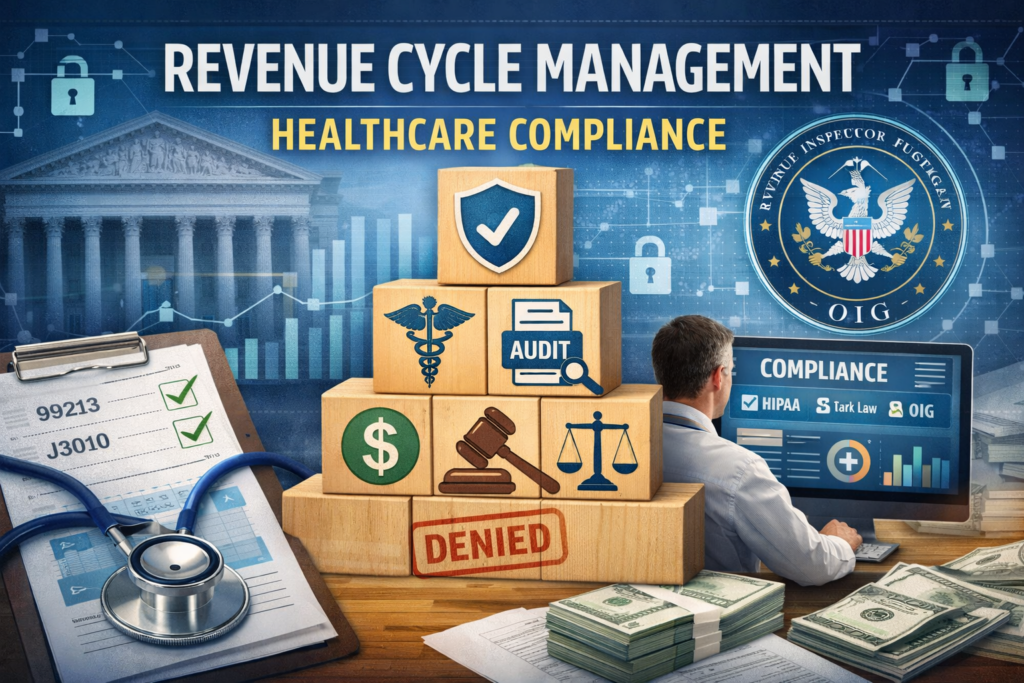
In the complex world of healthcare, compliance is more than a legal requirement—it’s a critical component of financial stability and patient trust. Healthcare compliance involves adhering to federal and state laws, payer-specific regulations, and industry standards, including HIPAA, the Stark Law, and guidance from the Office of Inspector General (OIG). Failure to comply can result in costly fines, audits, recoupments, and damage to an organization’s reputation.
With frequent changes to coding guidelines and payer rules, staying compliant can feel like navigating a constantly shifting landscape. Neglecting updates can lead to denied claims, financial losses, or even allegations of fraud. Healthcare leaders must prioritize processes that align with the latest regulations to safeguard both operational integrity and financial stability.
Key Areas of Compliance in Revenue Cycle Management
- Accurate Coding
Accurate procedure and diagnosis coding is the foundation of revenue cycle compliance. Each service provided must be reflected correctly in billing codes, and improper use of modifiers or outdated codes can trigger denials or audits. Routine audit preparation is essential for organizations to maintain compliance, prevent revenue loss, and minimize the risk of penalties. - Comprehensive Documentation
Detailed and compliant documentation supports coding accuracy and billing transparency. Missing or incomplete clinical information can result in downcoding, claim denials, or repayment demands. Maintaining thorough records not only protects against audits but also ensures that healthcare providers are reimbursed fairly for the care they deliver. - Regulatory Adherence
Healthcare organizations must comply with a wide array of regulations, including federal and state laws, payer-specific requirements, and industry standards. Non-compliance can lead to severe consequences, such as legal penalties, exclusion from federal programs, and reputational damage. Regularly monitoring and updating policies to meet evolving guidelines is critical to reducing compliance risk. - Financial Stability
Proper compliance directly impacts financial health. Accurate coding and billing reduce the likelihood of denied claims and delayed payments, ensuring a steady cash flow. Organizations that prioritize compliance are better equipped to maintain operational stability while avoiding costly disruptions. - Patient Trust and Satisfaction
Patients value transparency and integrity in healthcare billing. Demonstrating compliance and ethical practices builds trust, improves patient satisfaction, and fosters long-term loyalty. Providers who maintain rigorous compliance standards can enhance their reputation while delivering high-quality care. - Avoidance of Penalties
Non-compliance carries significant financial and operational consequences. Fines, audits, loss of licensure, and exclusion from federal healthcare programs can cripple a healthcare organization. Revenue cycle management compliance is therefore not just a regulatory necessity—it’s a strategic approach to protecting the organization’s bottom line.
Best Practices for RCM Compliance
Healthcare organizations can strengthen compliance efforts by implementing best practices that combine people, processes, and technology. Continuous staff training, clear policies, and proactive monitoring of regulatory changes are essential. Leveraging technology to automate audits, track compliance, and streamline workflows can significantly reduce the risk of errors and enhance operational efficiency.
How ComplyVision Supports Healthcare Compliance
ComplyVision is designed to simplify revenue cycle management compliance for healthcare organizations. This accreditation-agnostic platform centralizes regulatory tracking, automates audits, and ensures alignment with HIPAA, Stark Law, and OIG expectations. By consolidating compliance efforts, ComplyVision reduces risk, promotes staff readiness, and streamlines documentation and workflow processes.
With ComplyVision, healthcare providers can focus on delivering quality care while maintaining strict adherence to regulatory standards. Its proactive approach ensures that organizations stay ahead of compliance challenges, safeguarding financial health and operational success. To see how ComplyVision can transform your revenue cycle compliance, request a demo here.
Contact ComplyVision
Atlanta, Georgia
900 Circle 75 Parkway, Suite 1730, Atlanta, GA 30339
Phone: (770) 551-1412