An authentic culture of compliance develops when following policies and procedures becomes part of how an organization operates every day. While binders, checklists, and annual training sessions can help establish expectations, they are not enough on their own. Employees need accessible guidance, clear responsibilities, and opportunities to ask questions when requirements are unclear. At ComplyVision, we believe effective compliance management should support daily decision-making, strengthen accountability, and help organizations build safer, more consistent operations.
Why Compliance Must Go Beyond Annual Checklists
Compliance can easily become a routine exercise in completing forms, signing acknowledgments, and preparing documents before an inspection. Although these activities have a purpose, they do not automatically demonstrate that employees understand or follow the policies relevant to their roles.
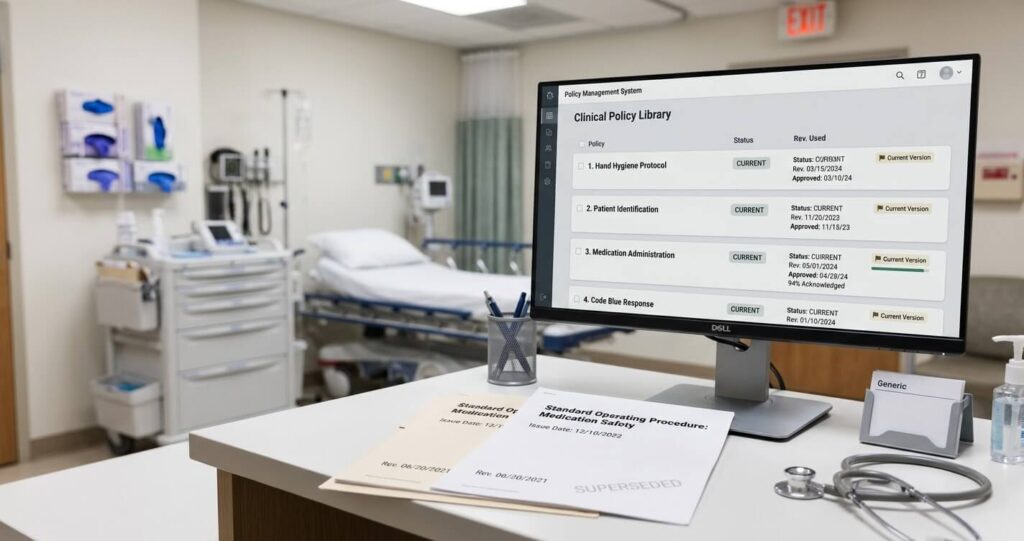
Consider what happens when a procedure changes but a department continues using an outdated version. Even employees who intend to follow the rules may unknowingly create inconsistencies or operational risks.
A stronger approach makes compliance an ongoing process. Policies are reviewed and updated as needed, employees receive relevant information, and managers monitor whether procedures are being followed. This helps organizations identify gaps earlier instead of waiting for an audit or incident to reveal them.
Make Policies Accessible, Clear, and Current
Employees cannot consistently follow policies they cannot easily find or understand. When documents are scattered across email threads, shared drives, printed manuals, and individual folders, confusion becomes more likely.
Organizations can reduce this problem by creating a centralized, controlled source for policies and procedures. Employees should be able to locate the current version, understand what has changed, and identify the steps relevant to their responsibilities.
Transparent policy distribution also means communicating updates instead of simply replacing a document. Notifications, acknowledgment requests, and targeted training can help employees recognize when a change affects their work.
Our ComplyVision platform supports centralized policy management, controlled versioning, alerts, acknowledgments, and related training resources. These capabilities help organizations improve visibility into policy distribution and create records that support accountability and audit preparation.
Establish Clear Accountability Across Departments
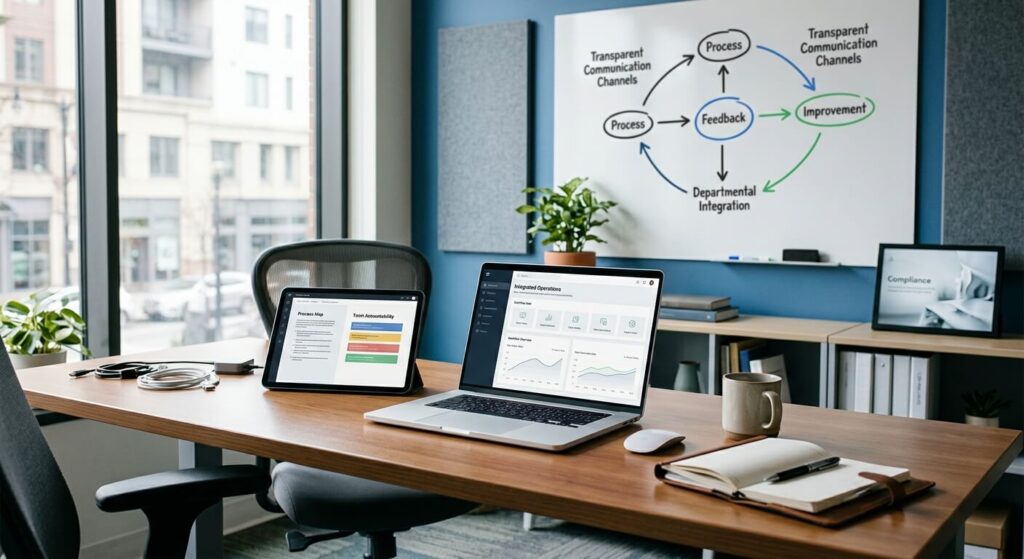
Compliance is not solely the responsibility of a compliance officer or leadership team. Different departments contribute to the organization’s overall compliance performance, and each needs to understand its role.
For example, department managers may be responsible for reinforcing procedures, ensuring their teams complete required training, and addressing recurring issues. Employees are responsible for following applicable policies and raising concerns when something appears incorrect. Leadership must provide the resources, communication, and oversight needed to support these expectations.
Clear accountability does not mean assigning blame whenever a mistake occurs. Instead, it means defining ownership, setting reasonable expectations, and ensuring that issues have a path toward resolution.
Organizations can strengthen this approach by documenting assigned tasks, tracking acknowledgments, monitoring outstanding actions, and reviewing progress regularly. When responsibilities are visible, teams can identify gaps and respond before small oversights become larger operational problems.
Encourage Open Communication and Early Reporting
Even well-written policies cannot anticipate every situation. Employees may encounter unusual circumstances, conflicting instructions, or procedures that no longer fit the realities of their work. If they are afraid to ask questions or report mistakes, management may not learn about problems until they become more serious.
A healthy compliance culture encourages employees to speak up. Leaders can support this by explaining how to report concerns, responding constructively to questions, and treating incident reports as opportunities to understand and improve processes.
Regular team discussions, accessible reporting channels, and follow-up on reported issues help make communication part of normal operations. Employees should also understand what happens after they raise a concern so they can see that their input is taken seriously.
When organizations identify recurring issues, they can review whether additional training, clearer instructions, or corrective actions are needed. This creates a practical feedback loop that supports continuous improvement.
Use Training and Monitoring to Reinforce Everyday Habits
Reading a policy is not the same as understanding how to apply it. Effective training connects written requirements to real responsibilities and helps employees recognize the actions expected of them.
Organizations can reinforce understanding through role-specific learning materials, knowledge checks, refresher training, and mock surveys where appropriate. Tracking participation and assessment results can also help managers identify areas where additional support may be necessary.
Monitoring is equally important. Dashboards, alerts, scheduled reports, and incident tracking can provide greater visibility into outstanding tasks and emerging concerns. These tools do not replace sound judgment or employee engagement, but they can help teams focus their attention where it is most needed.
ComplyVision provides tools for policy management, training, testing, risk tracking, reporting, and staff preparedness. By bringing these activities into a connected workflow, we help organizations move toward a more consistent approach to compliance and operational improvement.
Turn Compliance Into a Foundation for Operational Excellence
An authentic compliance culture is built through repeated actions, not a single annual initiative. Accessible policies, defined responsibilities, open communication, meaningful training, and consistent follow-through help employees understand how compliance relates to their everyday decisions.
When organizations make these practices part of normal operations, they can improve visibility, strengthen accountability, and become better prepared to identify and address potential problems. Compliance then becomes more than a requirement to satisfy; it becomes a practical part of responsible, effective management.
At ComplyVision, we help organizations strengthen their compliance management practices through centralized policy and standards management, automated alerts, training and testing tools, risk tracking, and audit-readiness resources. We support organizations in Atlanta, GA, and neighboring areas including Marietta, Alpharetta, Roswell, and surrounding communities, as well as organizations managing compliance needs across multiple locations. To learn how our platform can help integrate compliance into your daily workflows, visit ComplyVision or contact us at inquiries@filevision.net to discuss your needs and request a demonstration.