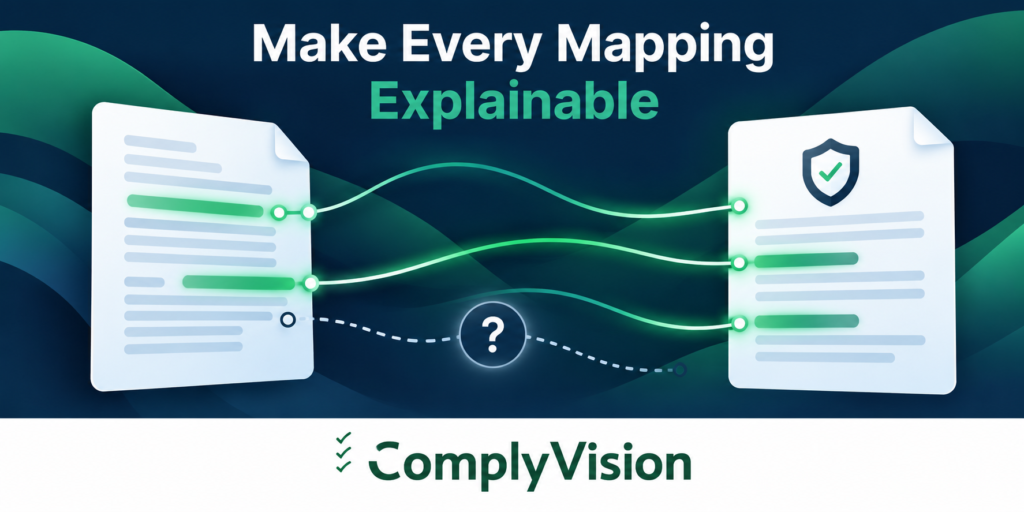
A policy mentions the same topic as a requirement, so someone marks the two as linked. Months later, a reviewer asks which part of the procedure addresses the requirement. The map contains a connection, but no explanation of why it was made.
Policy requirement mapping is more useful when it preserves that explanation. The objective is to help qualified reviewers trace source material to the organization’s response and see where work remains, not simply to create a dense list of links.
Identify the source precisely
Record the source organization, document or standard identifier, relevant section and version or effective date where available. A general link to an organization’s homepage may not lead a future reviewer back to the material that informed the decision.
Check source material through the appropriate official channel. The organization’s designated compliance or subject-matter owner should determine applicability. A document management team can help maintain the reference without independently deciding which legal, regulatory or accreditation requirements govern the organization.
Keep that distinction visible in the record. “Source captured” and “applicability reviewed” describe different stages of work.
Map to a specific response
Identify the relevant policy section, procedure, control or other organizational response. Explain briefly how it relates to the source. A whole-policy link can be a useful starting point, but it should not imply that every paragraph addresses every part of the requirement.
For a fictional example, a source calls for a defined review process. The organization may point to one policy section assigning an owner and a separate procedure explaining how the review is recorded. The mapping record should preserve both connections and any question about whether they are sufficient.
Explore the ComplyVision standards and policy management overview with this structure in mind. Confirm how source references and related organizational materials would be represented in the proposed setup.
Allow partial and unresolved mappings
A useful map must be able to show that a response is incomplete, awaiting interpretation or outside the reviewed scope. Forcing every item into a binary linked-or-unlinked label can hide those distinctions.
Agree status definitions and the person authorized to resolve each question. If a policy covers part of a source but the operating evidence remains unreviewed, record that limitation. A link by itself should not become a claim that the requirement has been met.
Avoid importing broad assurance language from a previous project or another organization. The evidence and applicability need to fit this organization’s circumstances and the review being performed.
Plan for changes on both sides
Source material can change, and so can internal policies. A mapping process should identify who reviews the effect of either change on the existing connection. Updating the policy title does not answer whether its substance still addresses the source.
Keep a record of what changed, which mappings need attention and who will review them. Where an earlier version is needed to understand a historical decision, preserve it according to approved records procedures.
The ComplyVision policy versioning and workflow tools provide a basis for discussing that process. Verify the configuration and responsibilities instead of assuming that a notification completes the impact review.
Test the map with an independent reader
Choose one requirement and ask a qualified colleague to follow the source reference, locate the organizational response and understand the recorded conclusion. They should be able to distinguish reviewed evidence from an open question.
Where the trail breaks, improve the explanation or assign the missing review. Keep the exercise focused on a small, meaningful set before expanding it. A modest map with clear reasoning and honest gaps is more useful for decision-making than a large map whose links nobody can explain.